
Nicolas Giuseppone Wins ERC Grant to Develop Active Materials

Published on June 23, 2025
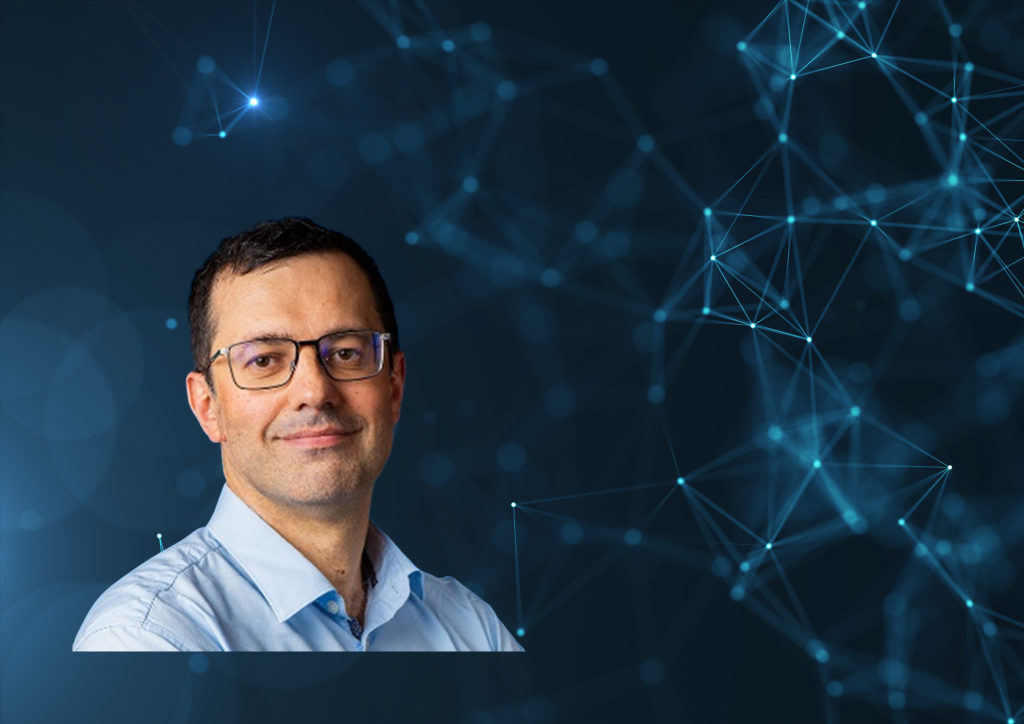
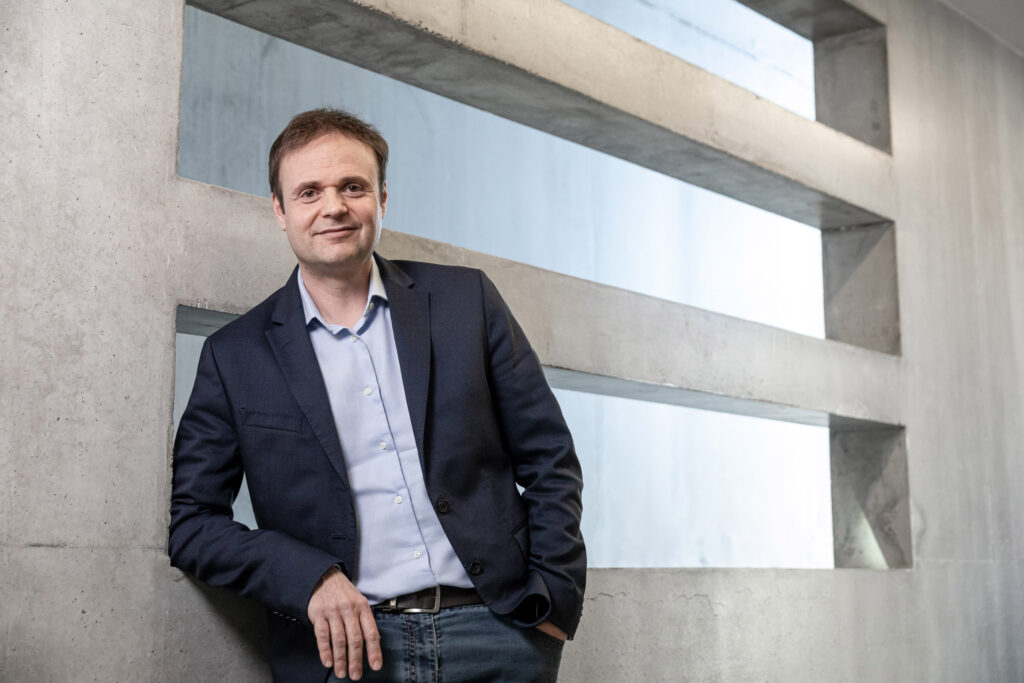
Nicolas Giuseppone, a professor at the University of Strasbourg and director of the Molecular and Supramolecular Synthesis and Self-Assembly (SAMS) team at the Charles Sadron Institute (CNRS), has been named to the highly selective list of ERC Advanced Grant recipients. This prestigious European grant will enable the team to develop self-assembled nanoscale molecular machines capable of moving and changing shape on command. These new active materials exhibit certain characteristics of living organisms—qualities sought after in many fields, particularly for medical and robotic applications.

Making materials more “alive”: an ambition with promising applications

Strasbourg is the birthplace of supramolecular chemistry and the first synthetic machines at the nanoscale, with two Nobel Prizes in Chemistry awarded to the pioneering researchers behind these discoveries (Jean-Marie Lehn and Jean-Pierre Sauvage). The capital of Alsace is also home to world-class research laboratories in the field of so-called “smart” materials. Professor Nicolas Giuseppone’s team is among them. Based at the Charles Sadron Institute since 2008, the researcher has gained international renown over the years and has been awarded ERC (European Research Council) funding for the second time.

Nicolas Giuseppone develops molecules capable of self-assembling and organizing themselves spontaneously. The researcher explains the major significance of his research: “The materials we use every day are very static; they do not adapt to their environment. This is the key difference from living organisms, which rely in particular on highly complex biomolecular machines capable of reacting to and responding to external stimuli. Our goal is to develop new active materials composed of small artificial molecular machines. These materials will, for example, be able to move or change shape on command.”

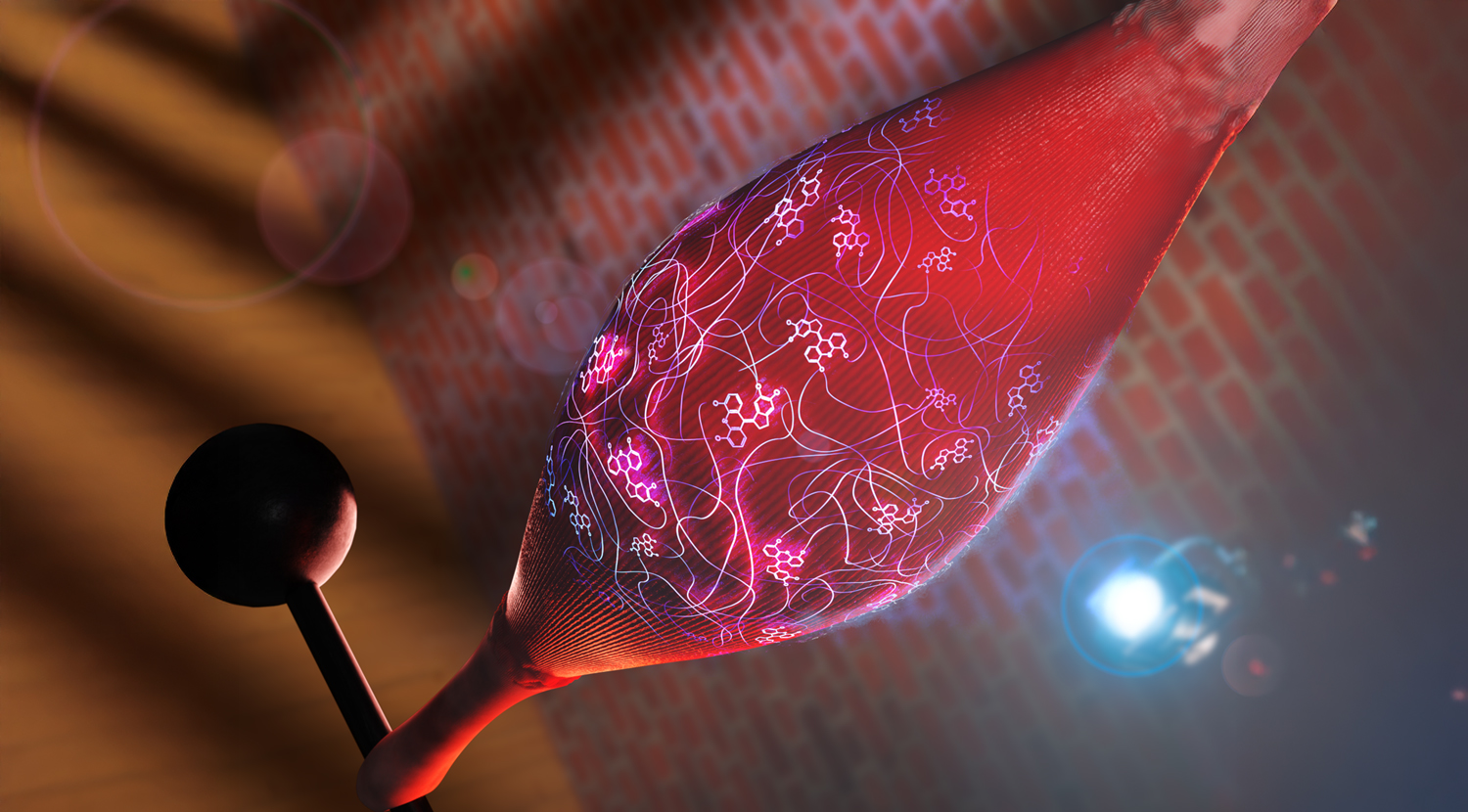
Creating materials that mimic the characteristics of living organisms allows us to better understand how inert matter acquires the ability to respond to changes in the environment and to adapt. It is also a field of research with promising applications, for example in healthcare: “Our muscles are fibrillar structures that slide past one another when we contract them. This movement occurs thanks to the action of thousands of natural molecular machines. Being able to recreate artificial muscles by developing contractile materials would be a tremendous breakthrough for future applications in regenerative medicine. To this end, we have developed a new type of material in which numerous molecular machines interact and induce contraction when activated.” Indeed, the Laboratory has synthesized a molecular motor whose rotation is activated by light: under UV light, the motor coils the material’s polymer chains around itself (video 1). The interaction of these thousands of molecules (Video 2) causes the material to contract on a macroscopic scale (Video 3). This contractile material is also very robust and can lift up to 100 times its own mass (Video 4)1.

Video 1: The Molecular Motor in Action

Video 2: Association of Molecular Motors

Video 3: Material Contraction

Video 4: Weight Lifting Test

Artist's rendering of an artificial muscle

In the future, these molecular machines could also be used to break down problematic structures such as β-amyloid peptides. These fibers accumulate on neurons and cause brain disorders, particularly Alzheimer’s disease. “We have synthesized molecular motors capable of intercalating between fibers very similar to the long protein chains that coat the neurons of patients. A light signal activates the machines; they begin to rotate and are able to break down the fibers 2,” explains the researcher, adding that this research is currently being conducted only in vitro and will require many more years of study before it can be considered for use in patients.

These nanomachines could thus enhance our therapeutic arsenal by destroying molecular structures that are harmful to our bodies, as well as by transporting and delivering drugs with high precision or by applying mechanical pressure to certain cells to stimulate the growth or differentiation of our tissues. Beyond healthcare, numerous applications can also be developed using these materials, which are capable of sensing their environment and adapting to it—particularly in robotics, sensors, and energy storage systems.

An ERC dedicated to further developing these materials

This prestigious European funding will enable Nicolas Giuseppone’s team to develop other light-activated “smart” materials, as well as molecular motors powered by chemical fuels: “We recently created a gel-like material capable of contracting and then relaxing3. The molecules that make it up rotate when supplied with a source of chemical energy, much like an engine that runs on gasoline. These molecules mimic what certain proteins in our cells do through enzymatic catalysis. This system demonstrates, for the first time, that chemical energy can be used to produce actual mechanical work from synthetic molecules. ” €2.5 million over five years will fund about ten positions within the laboratory to continue developing these materials. These funds are particularly welcome in these difficult times for public research: “The ERC grants allow us to focus on our research rather than on funding applications. Even though it’s always worthwhile to put our projects in writing to give them structure, securing this valuable European funding guarantees us real freedom for five years.” Over the next few years, the team will be able to explore the potential of molecular motors with peace of mind, thereby developing prototypes of the smart materials of tomorrow.

Sources

1. Scalable Approach to Molecular Motor-Polymer Conjugates for Light-Driven Artificial Muscles. Xuyang Yao, et al., April 13, 2024, Advanced Materials. https://doi.org/10.1002/adma.202403514


2. Out-of-equilibrium mechanical disruption of β-amyloid fibers using light-driven molecular motors. Dania Daou, et al. Advanced Materials 2024. https://doi.org/10.1002/adma.202311293


3. Transducing chemical energy through catalysis by an artificial molecular motor. Peng-Lai Wang, et al., Nature 637, 594–600 (January 15, 2025). https://doi.org/10.1038/s41586-024-08288-x

Donation DONATIONS MAKE A DONATION