
Jean-Marie Lehn Foundation Thesis Prize: Chemistry in the Service of Health Honored

Published on June 28, 2024
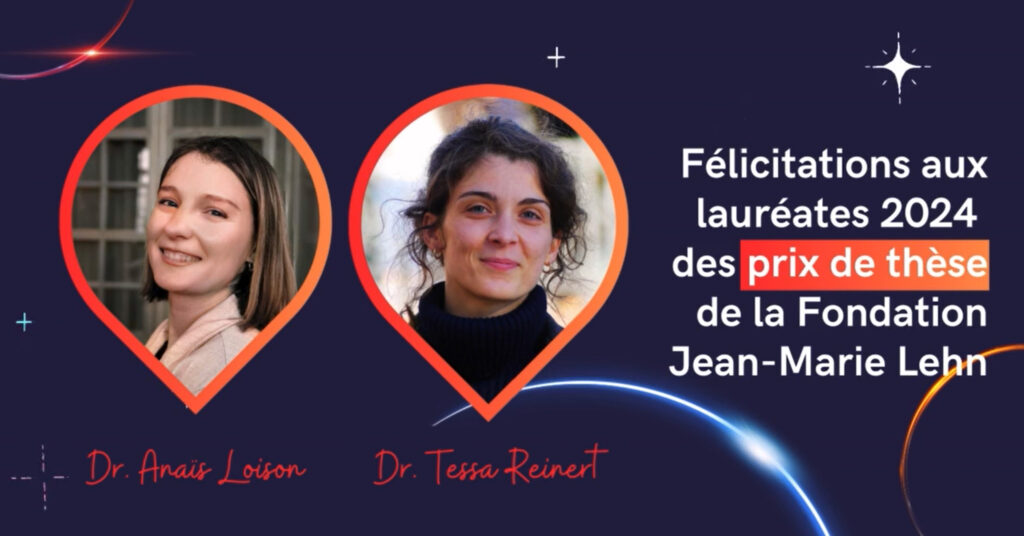
Each year, the University of Strasbourg’s dissertation awards recognize excellence in research conducted by doctoral students. Among this year’s winners, Anaïs Loison and Tessa Reinert stood out by winning the Jean-Marie Lehn Foundation Dissertation Award, presented by the Doctoral School of Chemical Sciences. This year, the award honors two ambitious research projects focused on health-related topics: the synthesis of new molecules to improve the efficacy of drugs and combat antibiotic resistance, as well as a new analytical method to improve the care of patients with Crohn’s disease.
Each year, the Jean-Marie Lehn Foundation awards prizes to doctoral students in chemistry at the University of Strasbourg, recognizing the most promising research at the intersection of biology, materials science, and medicine that has the potential to have a significant impact on society. This time, two female doctoral students stood out for the exceptional quality of their dissertation work, which focused on therapeutic innovation.

Anaïs Loison: Developing New Therapeutic Molecules to Improve the Efficacy of Future Drugs

One-third of the active ingredients in drugs on the market contain at least onefluorine atom.¹ These fluorinated molecules possess properties that are essential for a drug to be effective: they ensure resistance to degradation within the body and enable the drug to cross the body’s natural barriers to reach its therapeutic target. The development of new fluorinated molecules is the subject of intense competition due to public health concerns, particularly in the design of new antibiotics. In fact, the World Health Organization has ranked antibiotic resistance among the top 10 threats to human health worldwide, making the search for alternatives an urgent priority.

Anaïs Loison, a former doctoral student at the Laboratory of Applied Organic and Heterochemistry in Strasbourg, explains the role of her research in this context: “There is a growing need to rapidly develop new drugs, particularly a new generation of antibiotics. My dissertation was therefore part of this effort, focusing on the synthesis of high-value-added molecules.” Anaïs Loison has developed a method for synthesizing novel small fluorinated molecules, which could serve as “building blocks” for the synthesis of therapeutic compounds, thereby improving their stability and their ability to cross various physiological barriers.

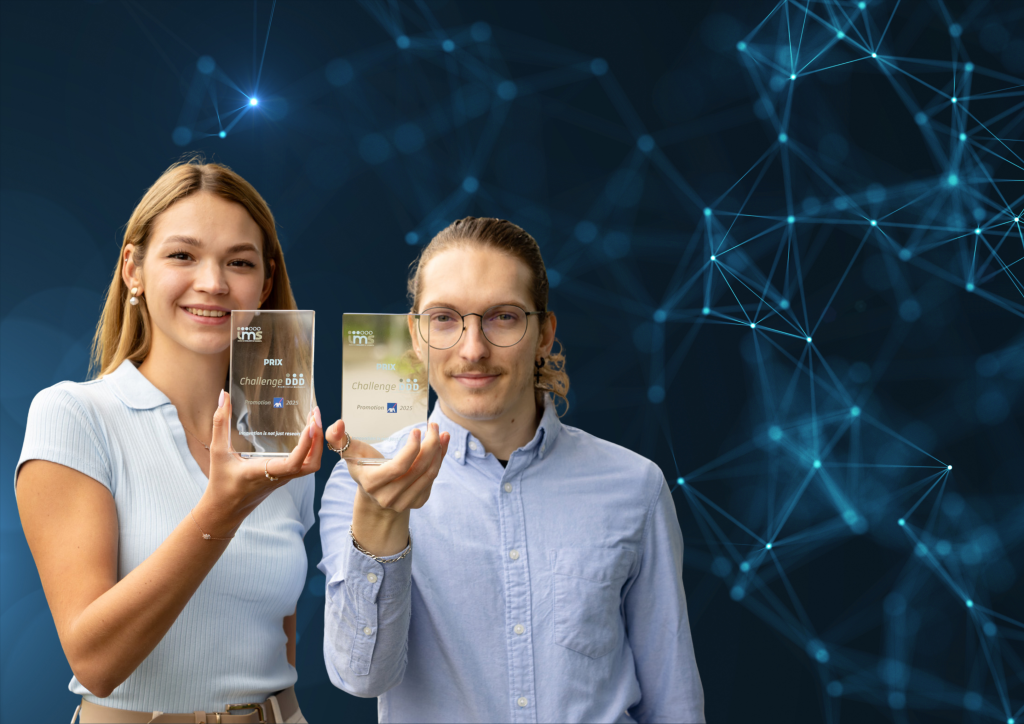
Anaïs Loison and her thesis advisor, Armen Panossian, at the University of Strasbourg’s thesis awards ceremony.

Because they are very stable (perhaps even too stable), fluorinated compounds are thought to pose environmental problems by accumulating in the soil. Residues of drugs not metabolized by the human body would thus end up in the environment via wastewater. Aware of this environmental challenge, the researcher explains the eco-design of her molecule: “Our fluorinated group would be stable enough to improve the metabolic stability of drugs, while still having sufficient degradability to prevent their accumulation in the ecosystem”—a compromise that benefits both human health and the planet. The researcher hopes that one day, her molecule will be used to develop new, effective, and environmentally friendly therapies.

Tessa Reinert: Combating the Loss of Efficacy in Crohn's Disease Treatments

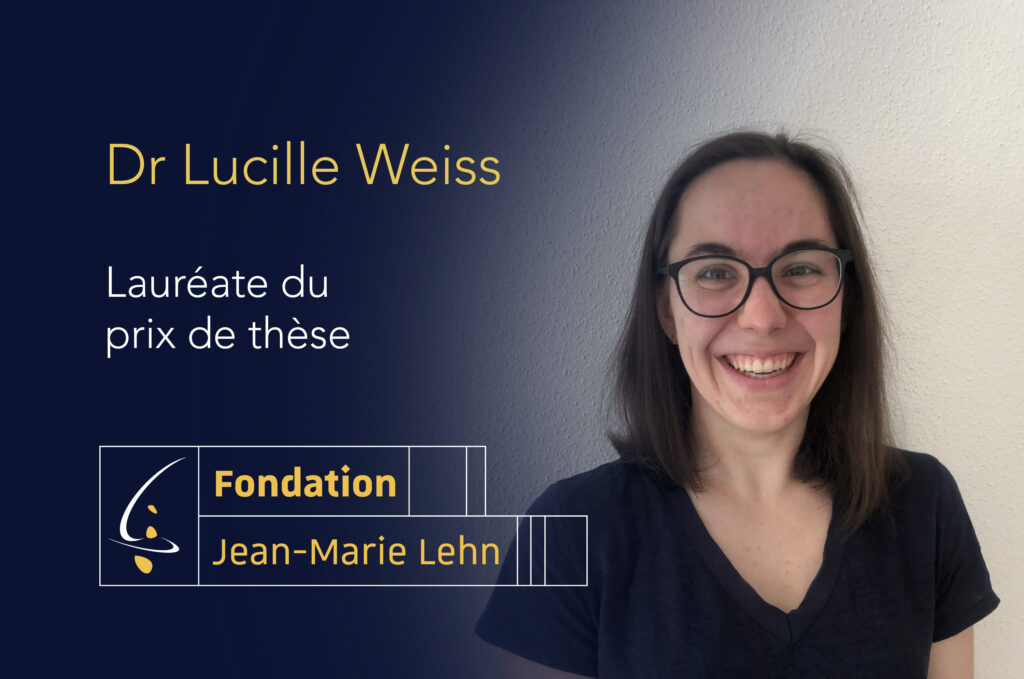
Tessa Reinert defended her dissertation in October 2023 at the University of Strasbourg.

Crohn’s disease, an incurable chronic intestinal disorder, affects 150,000 people inFrance² and several million patients worldwide. One treatment provides relief for patients: infliximab, a monoclonal antibody that suppresses intestinal inflammation. Tessa Reinert completed her dissertation at the Laboratory of Mass Spectrometry of Interactions and Systems in Strasbourg and studied this drug, noting its limitations: “Some patients experience a loss of clinical response—that is, the treatment’s effectiveness decreases over time—and they must therefore switch treatments quickly. These losses of response are still not well understood. It is therefore extremely important to monitor the clinical efficacy of these treatments and to better understand their fate within the body.”

In response to this challenge, Tessa Reinert has developed an innovative method to accurately monitor the progression of treatment through a simple blood test in patients. “The method makes it possible to measure the concentration of this antibody, determine whether the patient’s immune system is reacting against the treatment, and quantify certain chemical reactions that the antibody has undergone in the bloodstream. “We can therefore accurately monitor the treatment’s progress after administration to the patient with a single test.”

The researcher would like her method to be applied to as many patients as possible who are being treated with infliximab, thereby providing a better understanding of the differences in clinical response among patients and improving their clinical management.

Thesis award ceremony in June 2024. Twenty-two doctoral students received awards (across all fields of research), including two from the Jean-Marie Lehn Foundation for the quality of their work in chemistry.

Anaïs Loison and Tessa Reinert are currently pursuing postdoctoral careers in health-related fields, a calling for both researchers. The Jean-Marie Lehn Foundation is proud to support these two talented researchers from the University of Strasbourg by awarding each of them this incentive prize worth €1,500. The dissertation awards also provide an opportunity to highlight innovative and impactful research conducted in our region.
Donation DONATIONS MAKE A DONATION