The BNP Paribas Foundation supports students with innovative ideas in the field of health
Through a €150,000 donation, the BNP Paribas Foundation is co-funding an innovative educational program at the Strasbourg Institute of Medicinal Sciences. The goals are to promote equal opportunities among outstanding students, fund the discovery of new, innovative therapies, and help bring the pharmaceutical industry back to Europe. Profiles of the award recipients and their projects.
A Novel Approach to Developing New Drugs at the University of Strasbourg
Within the University of Strasbourg, the Strasbourg Institute of Medicines (IMS) is dedicated to the discovery of new drugs. Through three units that work in close synergy, the IMS brings together all the elements necessary for the development of pharmaceutical innovations:
- The research, conducted by the Medalis Research Center (12 laboratories and more than 200 researchers).
- The training program is offered at Euridis, the school of pharmaceutical management.
- Innovation, supported by Inedis, a pharmaceutical startup incubator.
Each year, the institute launches the DDD (Drug Discovery and Development) Challenge, a true showcase of collaboration among its three divisions and led by the Euridis School. This competition—the first of its kind in France—gives pairs of students nearing the end of their master’s programs the opportunity to engage in a research project and collaboratively develop a solution to a real medical challenge. For each pair, this program funds transdisciplinary doctoral degrees (in chemistry and/or biology) whose research topics have real potential to lead to the creation of a startup and the development of innovative therapies for patients. Supported by researchers, professors, and industry professionals, the doctoral students carry out their research projects while exploring the possibilities for commercializing their drugs, the potential market, and regulatory considerations.
Sponsorship: Essential Support for Promoting the Best Duos
Since the competition’s inception, the quality of the projects submitted and the high caliber of the students have made the task of the expert jury responsible for selecting the winners a challenging one. Each year, choosing the winning pairs proves to be a difficult task. Faced with this challenge and to ensure that promising projects do not go unfunded, the BNP Paribas Foundation has decided to increase the resources allocated to the program. Through a donation of €150,000, the Foundation will co-fund a new winning student team with the IMS.
According to Isabelle Giordano, Head of Group Philanthropy and Executive Director of the BNP Paribas Foundation , “Promoting equal opportunities for deserving students has been a key mission of our foundation for many years. If a pair of students is working on a major project, we want to give them the resources to carry it out—both to support the careers of these talented young researchers and to benefit the patients who will receive their future treatments.”
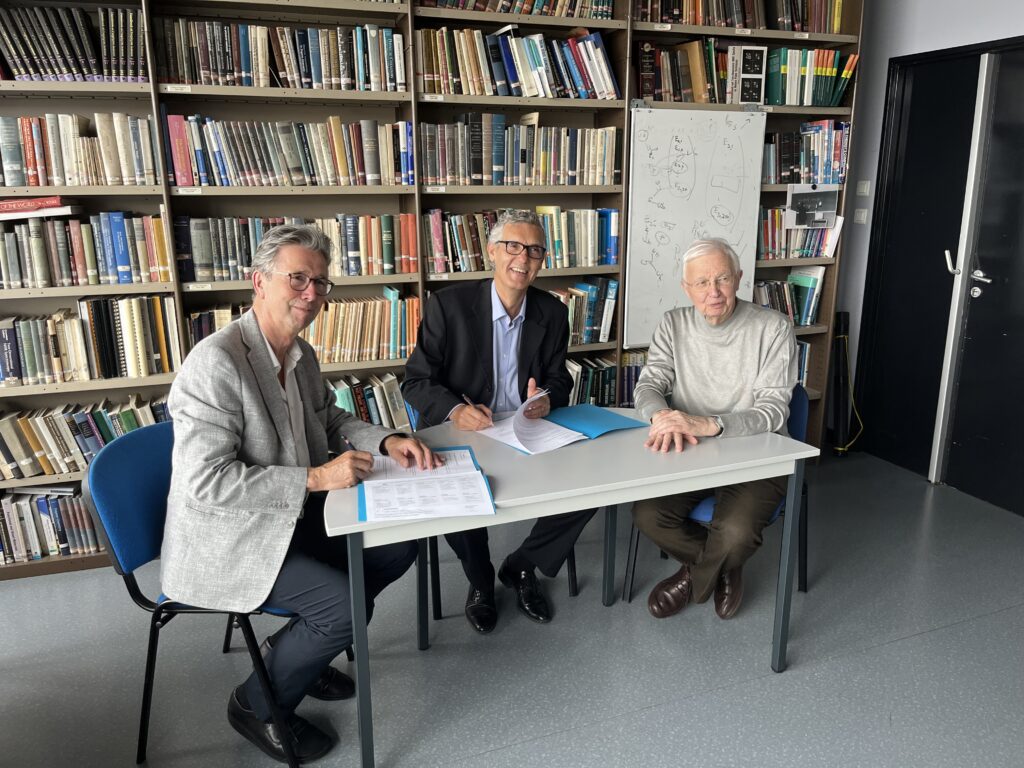
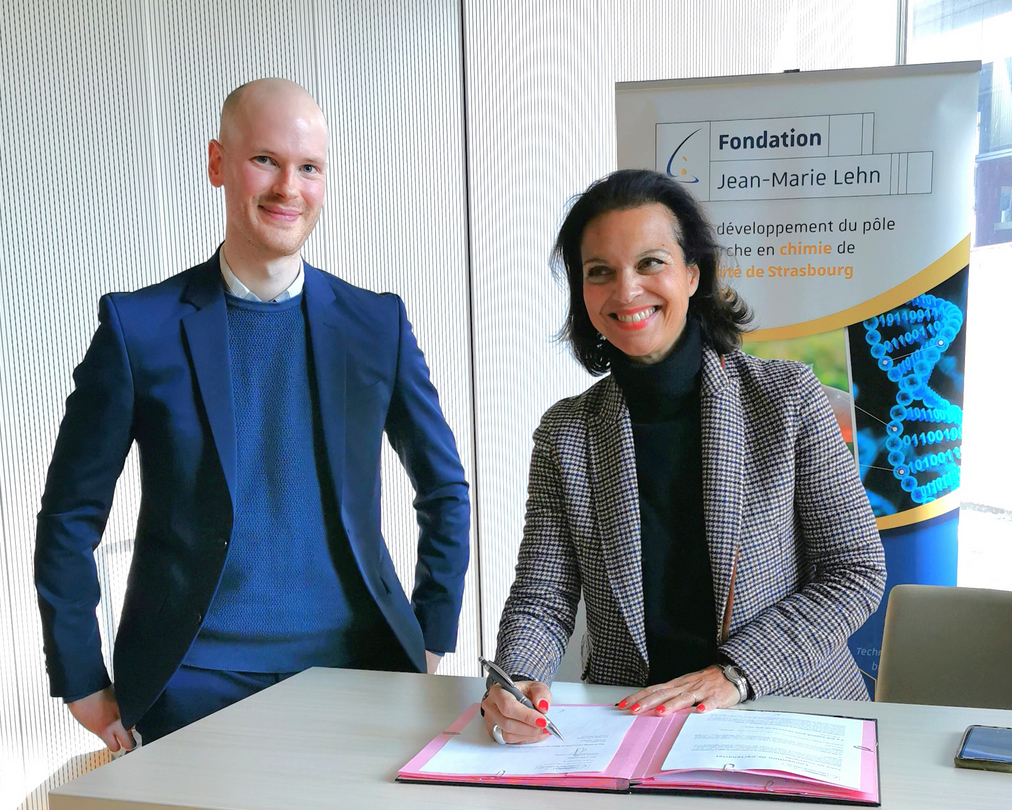
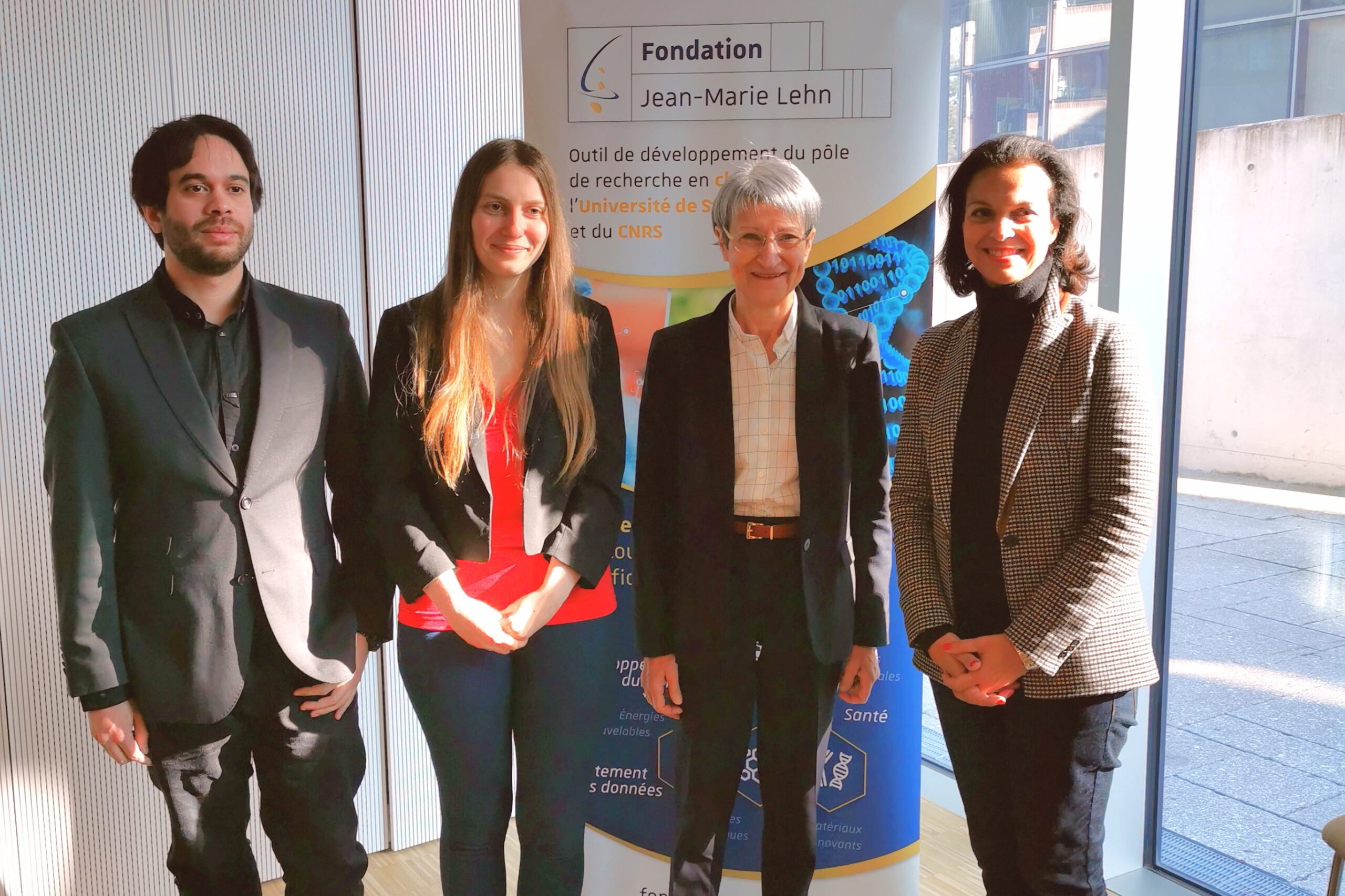
Signing of the donation agreement, in the presence of Ms. Isabelle Giordano (right), Head of Group Philanthropy and Executive Director of the BNP Paribas Foundation, alongside Ms. Sylviane Muller, Director of the Strasbourg Institute of Medicines and a researcher in immunology and therapeutic chemistry in Strasbourg, and the first winning pair from the 2019 competition: Agathe Boos and Julien Most.
2023 Award Winners: Innovative Treatments for Cancer and Dengue Fever Developed in Strasbourg
Several pairs of students presented their projects as part of the 2023 DDD Challenge. The jury, composed of experts from academia and the pharmaceutical industry —and chaired this year by Séverine Sigrist, president of Medtech Defymed—assessed the quality and commercial potential of each project.
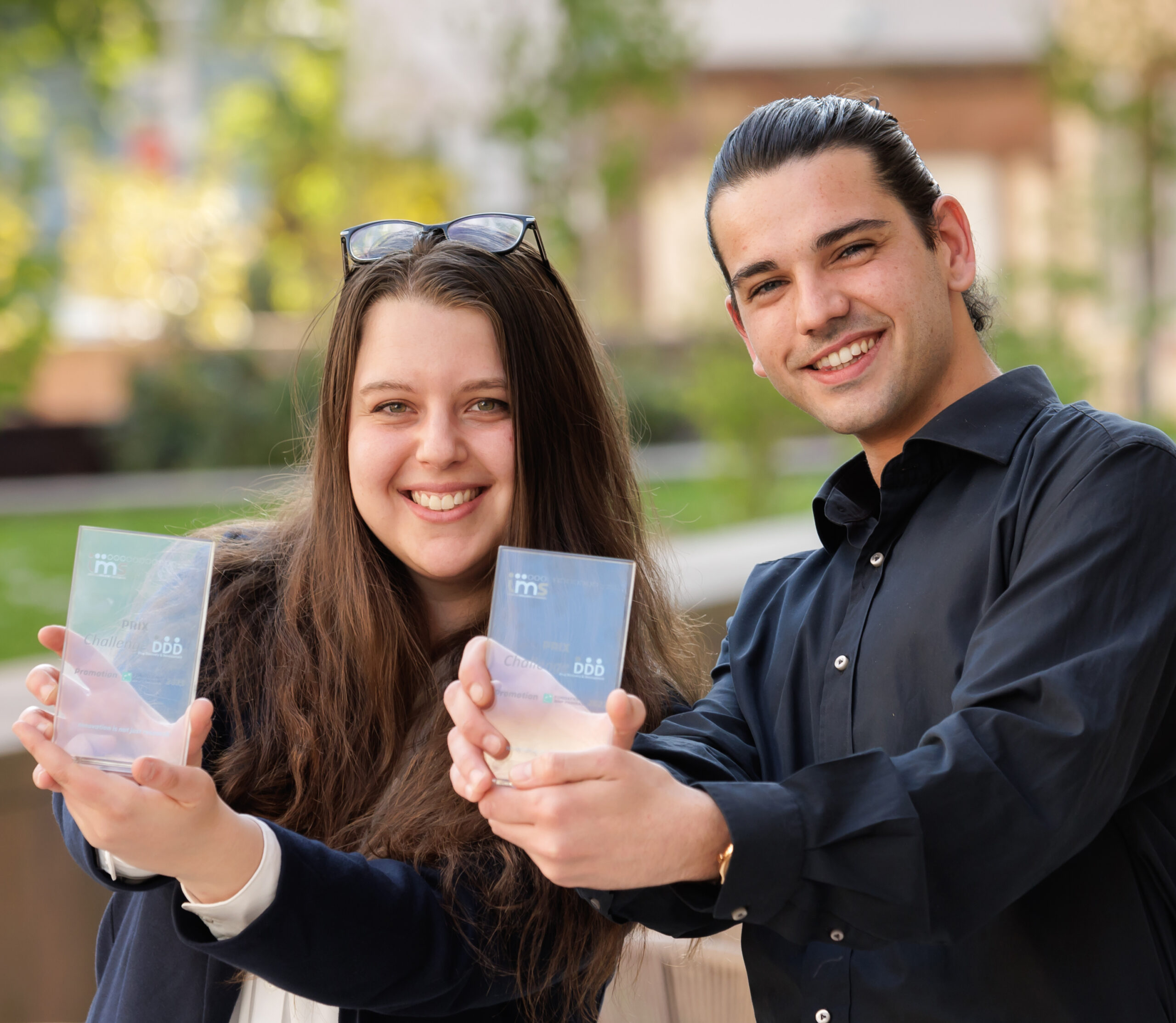
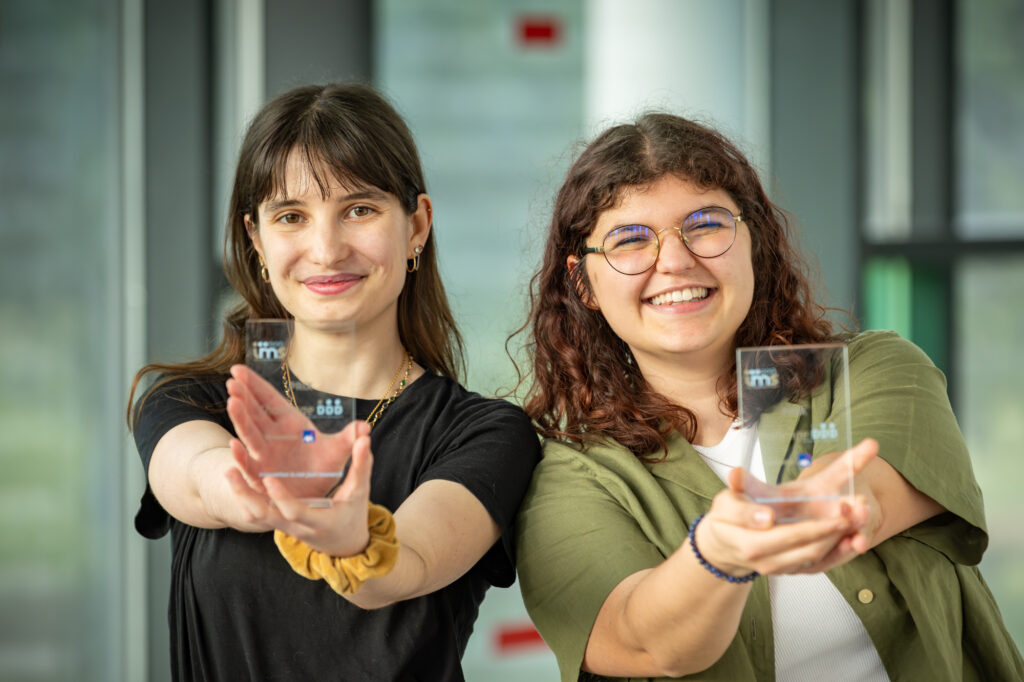
Among the candidates, two teams stood out and won the challenge: Charline Keller and Pedro Lopez, who are developing an innovative cancer treatment, and Khouloud Chtiba and Pualani Ateni, who are proposing a drug to treat dengue fever.
Award winners supported by the BNP Paribas Foundation
Pedro Lopez (biologist pursuing a Master’s degree in Pharmaceutical Biotechnology)
Together, the two young researchers hope to tackle a particularly aggressive form of bone marrow cancer : multiple myeloma. Often diagnosed at a late stage, this cancer is fatal in 50% of cases within 5 years of diagnosis1. The reason: the heterogeneity of this cancer, in which the cells that make it up can vary greatly from one another. This characteristic complicates the identification of therapies that are effective against all types of cancer cells.
Charline Keller suggests using a technique she employed during her master’s program to better understand their differences:
“We want to isolate each cell derived from multiple myeloma to analyze differences in the expression of certain problematic proteins. The protein known as GSPT1 is involved in the proliferation of this cancer. Our project involves developing a tool that will allow us to test treatments and understand their effects at the single-cell level.” With this approach, Pedro Lopez proposes designing a molecule capable of specifically destroying this excess protein: “The goal is to develop a CeLMOD—that is, a molecule capable of specifically recognizing the GSPT1 protein and triggering its destruction by activating the cell’s natural elimination system. “Thanks to the sorting of cancer cells performed by Charline, I’ll be able to test the effectiveness of this treatment directly on samples from patients.” This type of approach also opens up the possibility of selecting the most appropriate therapy for the specific types of cancer cells analyzed on a case-by-case basis for each patient.
For Pedro Lopez, this challenge is not just about securing funding for his dissertation ; “it’s a unique opportunity to work on a concrete research project leading to a therapy, but also to manage the entire process of bringing an innovation to market. “I had already completed a 6-month internship at SATT Conectus (the university’s technology transfer office) to better understand how to move from academic discovery to marketable innovation, so this competition was perfectly aligned with my expectations.”
Our articles on the same topic