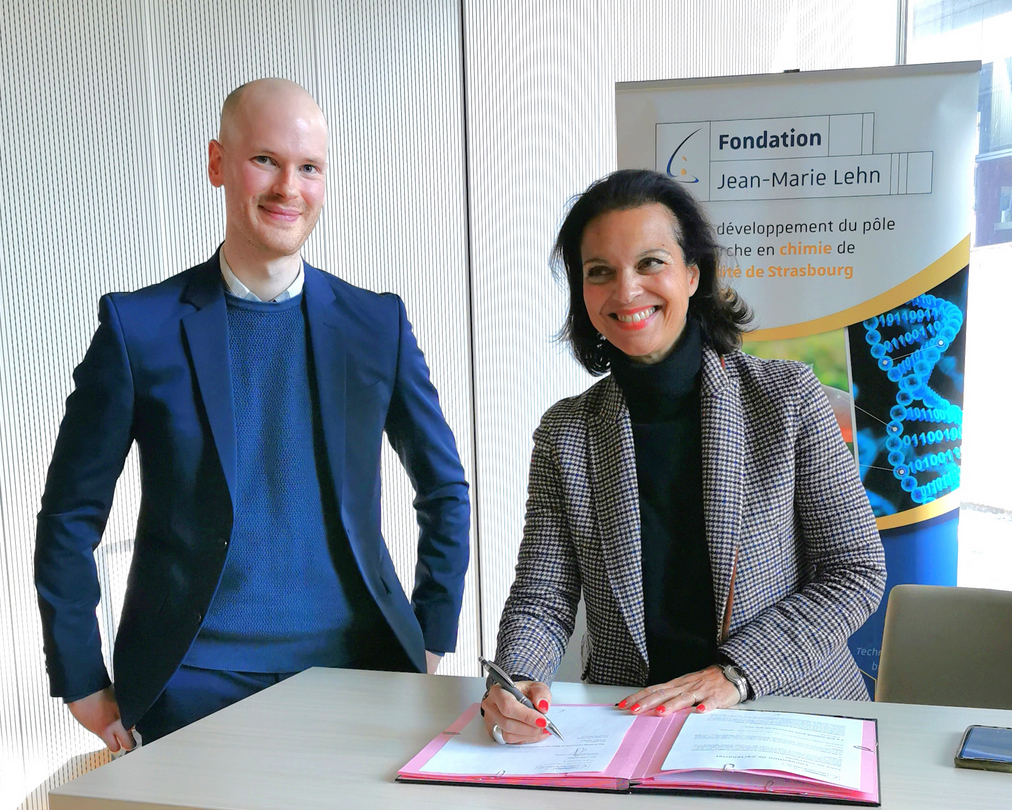
The University of Strasbourg is launching the ChiMIA Chair (“Industrial Chemistry, Materials & AI”), a large-scale collaborative project that brings together Strasbourg’s academic ecosystem of excellence, numerous industrial partners, and local governments. The Jean-Marie Lehn Foundation has also supported the chair’s organizers in structuring the project and securing funding. Recognizing the strategic importance of this chair, twelve industrial companies have already pledged nearly €1.2 million in corporate philanthropy over five years to reinvent chemistry in the age of AI. The goal is to intensify the training of a new generation of engineers with dual expertise in chemistry and AI, and to use artificial intelligence to accelerate research in industrial chemistry and the design of innovative materials.
Artificial Intelligence: A Disruptive Tool for Chemical Research
In chemistry laboratories, scientists are working to discover new therapeutic molecules, innovative materials, and more sustainable and cost-effective synthetic processes. While there is no shortage of ideas, the major obstacle remains the difficulty of testing an infinite number of possible strategies. Testing millions of molecules by varying a multitude of experimental parameters is practically impossible.
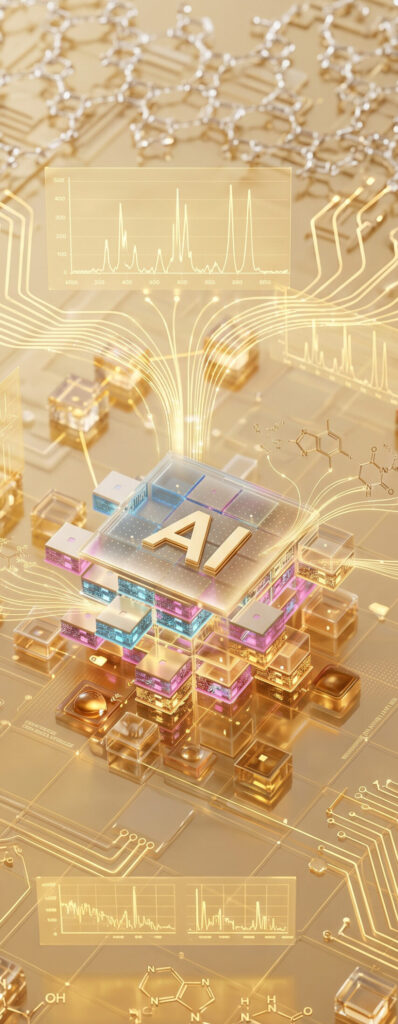
In pharmaceutical engineering, chemists design molecules capable of interacting with a specific biological target. Artificial intelligence makes it possible to explore this vast range of possibilities by designing and testing millions of structures in silico , predicting their interactions, and eliminating the least promising leads at a very early stage.
The same challenges exist in the search for new materials and industrial processes. AI can simulate compositions, predict their properties, and optimize formulations even before they are manufactured. In industry, it also helps control processes in real time by monitoring numerous parameters and anticipating malfunctions.
In this new landscape, chemists continue to play a central role: they are the ones who interpret the results and ensure their reliability. AI is a powerful driver of innovation in the fields of health and sustainable development—strategic priorities that require the training of high-level experts at the intersection of chemistry and AI.
The pioneering role of ECPM, the University of Strasbourg’s school of chemical engineering, which anticipated the AI boom
Today, data scientists specializing in AI are not trained in molecular design and lack the necessary background to understand chemical interactions. The field needs chemists with strong AI skills. Anticipating this need, the European School of Chemical, Polymer, and Materials Engineering (ECPM) created a new major—“Chemistry & AI”—in 2019. Students who complete this program have a unique profile as chemical engineers proficient in data science and AI—a rare dual skill set that is highly sought after, particularly in industry.
Engineering students take more than 300 hours of coursework focused on chemistry and artificial intelligence: programming languages, data analysis and processing, predictive models, and more. Engineering students learn how to use and configure artificial intelligence to design new molecules, predict the properties of a novel material, and optimize a formulation to achieve a specific property. They are also trained in AI-driven control of production processes.
This program is closely tied to the challenges faced by companies in the field: instructors come from the school’s industry partners, student-industry projects are developed, and four internships—in research and industry—are required.
Given the success of this program—the only one of its kind in France—the ECPM decided to launch a more ambitious project: to establish a chair for education and research dedicated to AI in chemistry, linked to this program.
The “Industrial Chemistry, Materials, and AI (ChiMIA)” Chair: A Comprehensive, All-Encompassing Initiative
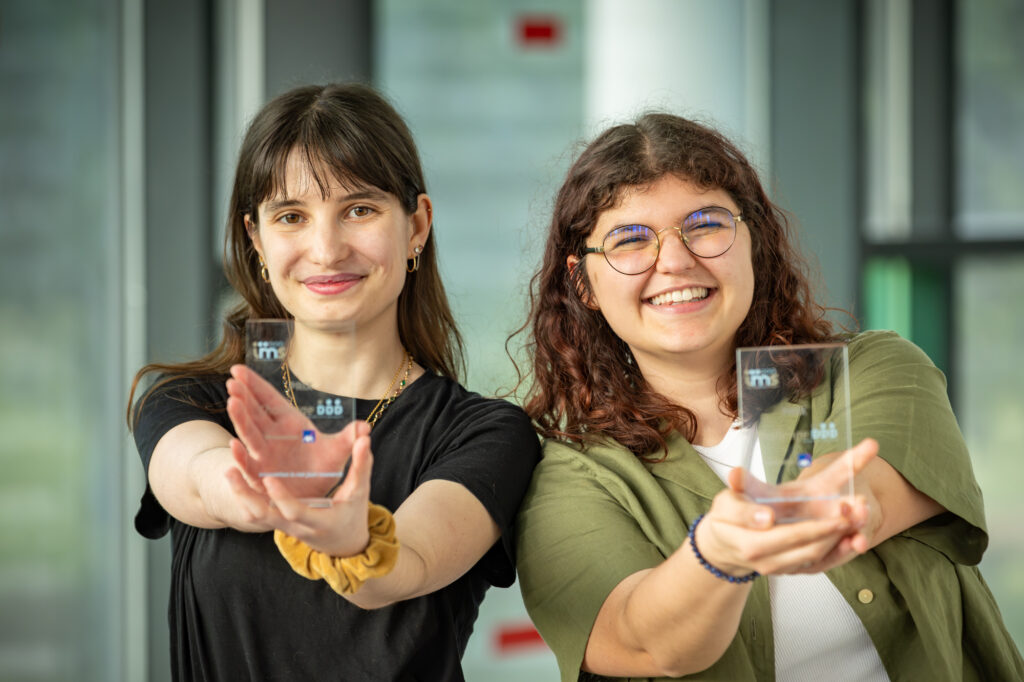
The chair will be held by two distinguished researchers, both members of the Charles Sadron Institute: Gilles Marcou, a faculty member and researcher, who serves as the chairholder, and Loïc Jierry, a professor at ECPM and, since 2019, director of the Chemistry & AI major, who serves as the co-chairholder.
This new chair will enable the ECPM to remain at the forefront of research in this field, while also funding and strengthening its educational programs. First and foremost, it will facilitate the development of collaborative research to foster the emergence of new research programs involving academic laboratories and companies. Its work may focus in particular on chemoinformatics, modeling, materials, polymers, formulation, and processes, with the goal of developing AI methods tailored to the practical challenges of industrial chemistry. This team will ensure that the curriculum is constantly adapted through ongoing monitoring of AI developments. Funding for the chair will also be used to strengthen the initial training of engineers by increasing enrollment in the Chemistry & AI major to meet industry’s significant needs, as well as to upgrade its IT infrastructure and create a dedicated space for exchanges between students, researchers, and industry representatives. The training will not be limited to students: continuing education modules for professionals, developed in collaboration with industry partners, will also support employees’ professional development.
Beyond its initial five-year term, the ChiMIA Chair will serve as the foundation for a sustainable hub dedicated to artificial intelligence for chemistry and materials. By sharing the costs of research into cross-disciplinary issues, the Chair will enable the development of methods that can be applied across multiple sectors, ranging from cosmetics and pharmaceuticals to polymers and industrial processes. By expanding its network to include other European industrial partners, the chair will act as a catalyst, facilitating the development of scientific and industrial projects on an international scale. In line with an open science approach, the data and software developed by the chair will be freely accessible and may be reused by other researchers. It will thus help make Strasbourg an international hub for sovereign, ethical, and sustainable AI in chemistry.
The private sector’s unprecedented and explosive enthusiasm for this visionary project
To fund this initiative, the ECPM and the Jean-Marie Lehn Foundation launched a fundraising campaign in September 2025 targeting chemical companies in the region. Twelve manufacturers immediately stepped forward, enabling the campaign to raise more than €1.2 million in record time, with the goal of making Strasbourg a nationally and European-level center of excellence in the field of AI applied to chemistry.