Porous Materials of Interest for the Energy Transition
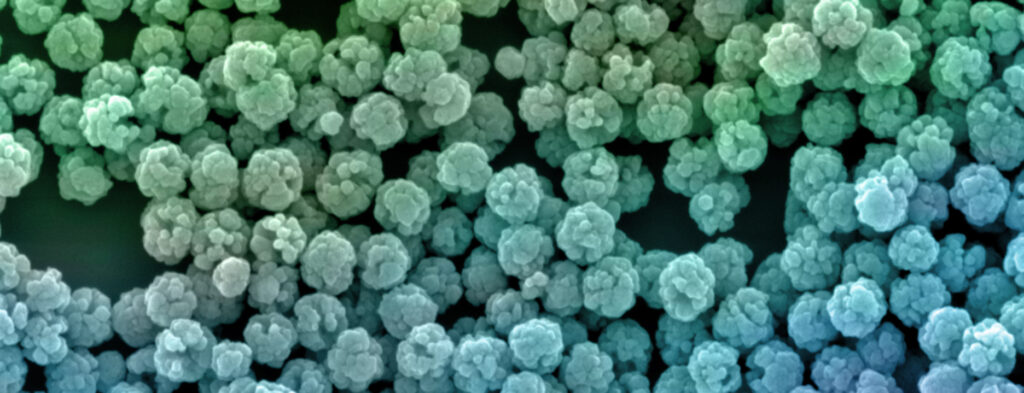
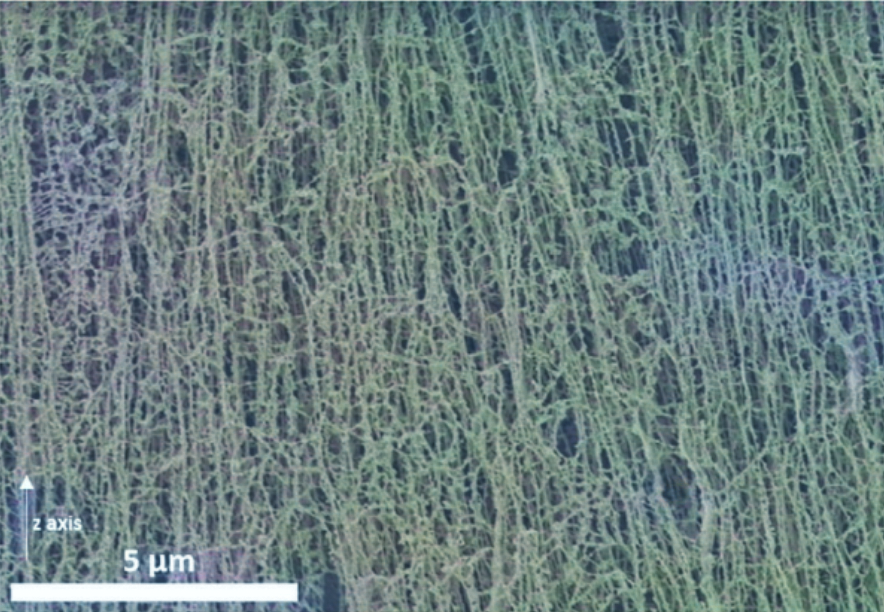
The study of mesoporous or lamellar substrates, such as catalyst supports and soils, is of great interest for the energy transition. These materials have numerous applications, particularly in the fields of catalytic biomass conversion, adsorbents for contaminant reduction, and renewable energy storage.
Optimizing these porous materials for new energy applications requires identifying the relationships between their structural and chemical properties on the one hand and their performance on the other. Carmen’s research will therefore focus on the multiscale characterization of their structure under operating conditions that are as close as possible to real-world conditions—known as operando conditions—in order to link these properties to their transport characteristics and reactivity.
The Association of Laboratories of Excellence
By bringing together three outstanding academic teams—from the Center for Very High-Field Nuclear Magnetic Resonance at Lyon 1, the Institute of Materials Physics and Chemistry in Strasbourg 2, and the Laboratory of Physical Chemistry of Electrolytes and Interfacial Nanosystems 3—as well as those from the IFP New Energies Research and Innovation Center, Carmen is a consortium that is unique on an international scale.
A major strength of this joint laboratory lies in the complementary expertise of the research teams and the shared use of their high-performance equipment. Thanks to this collaboration, numerous characterization techniques—including innovative in situ approaches—will be employed, such as low-field and high-field NMR, as well as imaging techniques coupled with modeling.