
Connected Health: An Ultra-Sensitive Graphene-Based Blood Pressure Sensor
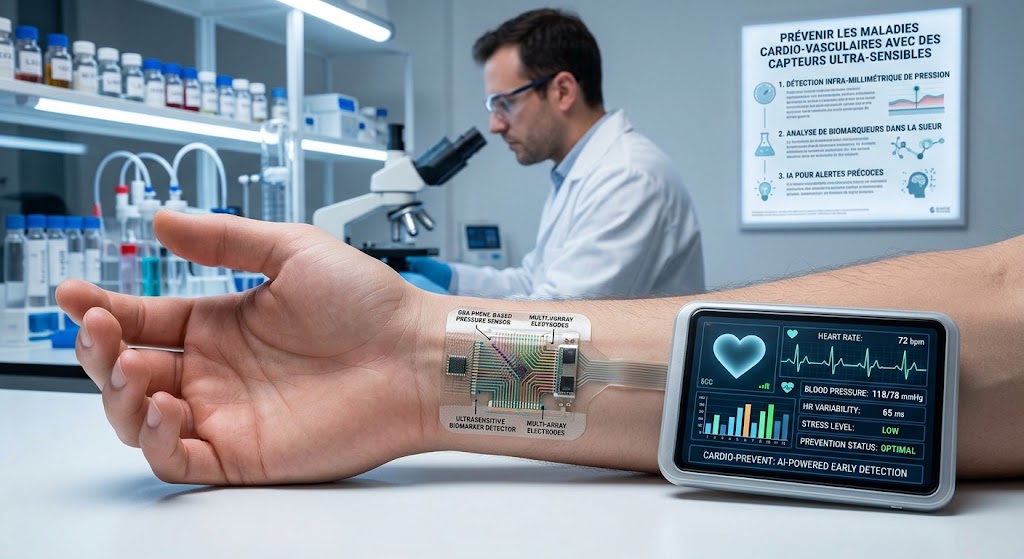
Advances in the field of connected devices have revolutionized the way we interact with the world around us and represent a rapidly growing market. In addition to their implications for communication and entertainment, these advances play a crucial role in the field of health care, particularly in medical monitoring. Researchers at the Nanochemistry Laboratory at the Institute of Supramolecular Science and Engineering (ISIS), led by Paolo Samorì, have developed a portable, highly sensitive graphene-based pressure sensor capable of detecting even the faintest heartbeats in real time when worn on the skin. These new graphene-based blood pressure sensors open up new possibilities in the field of connected health.
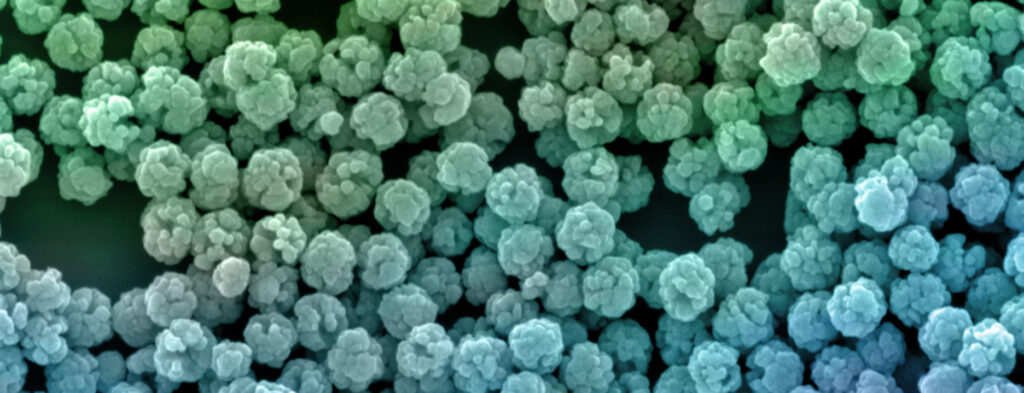
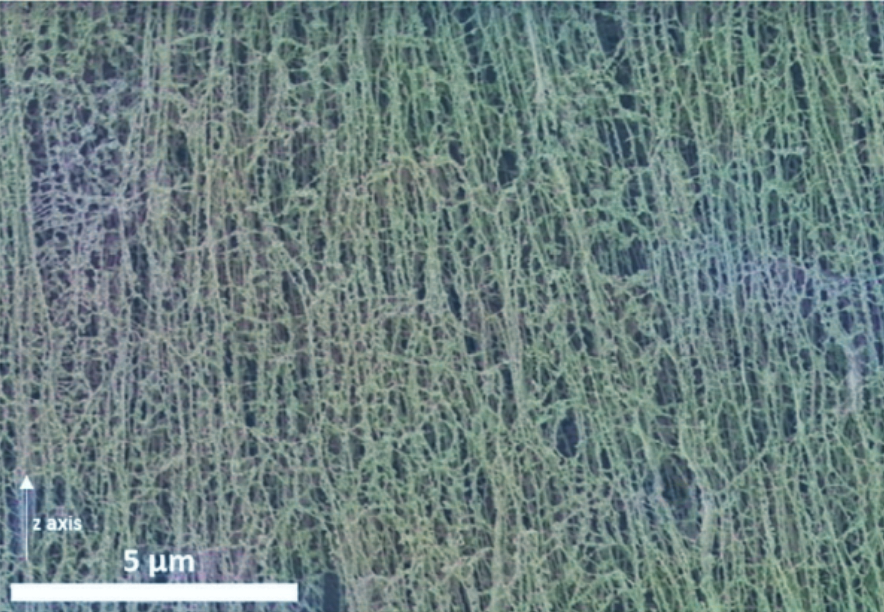
These next-generation sensors are the result of an international collaboration with researchers from Adam Mickiewicz University in Poland and the University of Florence in Italy. Inspired by the layers of French pastries—such as “mille-feuilles”—the researchers built a sensor that can be understood using basic high school science. Paolo Samorì, a researcher at the University of Strasbourg and the CNRS, explains: “We all studied Hooke’s law in high school; it describes the relationship between the force applied to a spring and its compressibility, defined by the spring’s stiffness constant. So, our idea was to demonstrate that, at the nanoscale, you can draw on Hooke’s law to develop highly sensitive pressure sensors.” The researchers replaced the puff pastry and cream with layers of molecular springs and graphene oxide, thereby forming a molecular sandwich to which electrodes are attached to measure the spring stiffness constant, which varies depending on the molecules used. This allows the molecules to be carefully incorporated into the mixture to adjust the pressure sensitivity according to the desired objective.
A Wide Range of Opportunities in Health and Beyond!
The sensor’s properties give it the potential to be used as a wearable health and fitness tracking device. Potential applications extend far beyond health monitoring—this is just a small fraction of the pressure-sensing devices that are essential to everyday life. Paolo Samorì estimates that products based on this technology could be on the market within the next five years. “We are working with commercial companies to bring this product to market.” In 2023, the lab secured significant European funding to continue developing this technology.
Sensor principle: molecular springs sandwiched between graphene sheets. ©Chang-Bo Huang
This project, initially funded by a donation from the Solvay Group, illustrates the importance of the early-stage funding provided by the Jean-Marie Lehn Foundation to develop concrete innovations. This initial support makes it possible to produce a proof of concept, which is essential for securing additional funding and bringing to fruition applied research that is poised to revolutionize connected health. This research is also part of the large-scale “Graphene Flagship” initiative led by the European Union.
→ Learn more about Solvay’s support for the University of Strasbourg
Our articles on the same topic