Understanding the mechanisms of iron uptake: a key step toward targeted therapies
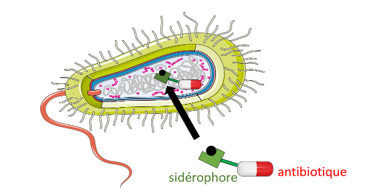
Cefiderocol, an antibiotic used in hospitals and developed by Shionogi, chelates iron and uses iron uptake pathways to penetrate bacteria. Despite this initial success, many challenges remain in developing other effective siderophore-antibiotic conjugates.
In fact, P. aeruginosa does not simultaneously express all 21 of its iron import pathways; rather, it adapts and activates only those that will be most effective depending on the bacterium’s environment or the type of infection. To use these pathways as entry points for antibiotics, it is therefore essential to understand which pathway is expressed and used depending on the context or type of infection, and which siderophore to target for optimal delivery.
As Isabelle Schalk explains: “If we ever want to develop new antibiotics delivered by siderophores, we need to identify which pathways are activated by the bacteria, both at the population level and at the single-cell level. This raises a question: in a given environment, do all bacteria use the same iron import pathway, or is there heterogeneity within the population?”
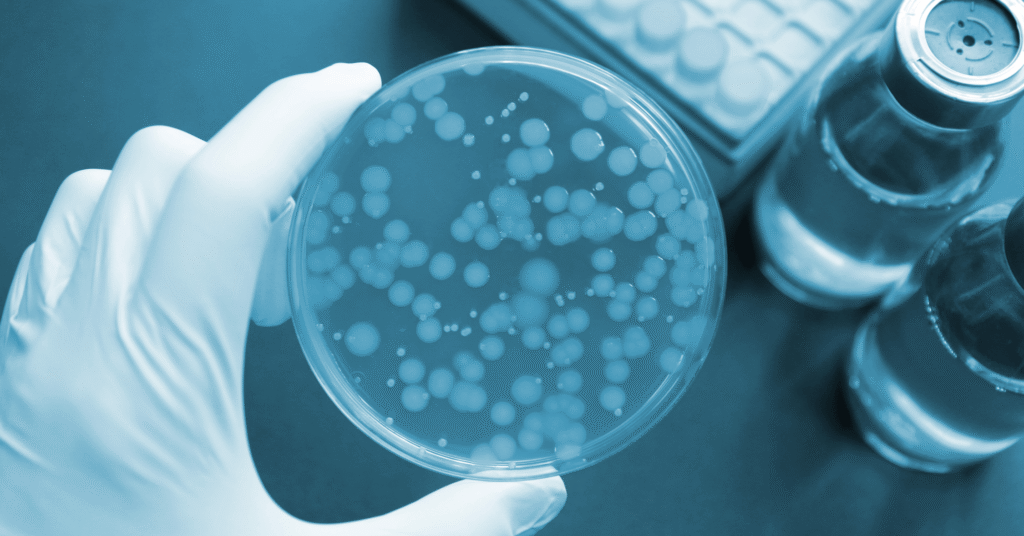
To answer these questions, funding from the French National Research Agency (ANR) enabled the team to develop 21 strains of P. aeruginosa capable of emitting a fluorescent signal when one of the 21 iron import pathways is activated. This allows for real-time monitoring of the expression of these pathways in bacterial cultures. The Jean-Marie Lehn Foundation subsequently supported the project to develop a microfluidic system to study these mechanisms at the level of individual cells.
“This system allows us to study P. aeruginosa in a precisely controlled environment (iron concentration, pH, etc.) and to track the activation of the various iron uptake pathways,” explains the researcher, who has recruited a doctoral student and assigned an engineer to this project. This duo, working at the intersection of imaging and microfluidic chip design, will make it possible to predict the environmental conditions that specifically activate the multiple iron uptake mechanisms of P. aeruginosa.
In collaboration with the team led by Professor Morgan Madec (ICube Laboratory, Strasbourg), a specialist in the modeling of biological mechanisms, Isabelle Schalk aims to use artificial intelligence to predict which iron uptake pathways the bacterium activates depending on its environment. This approach will help identify the most promising pathways for the targeted delivery of antibiotics.
Recent findings to refine the strategy
By combining fluorescent reporters and mathematical modeling, researchers on the team recently quantified the transcriptional regulation of four iron-specific transporters using catechol-type siderophores (article published in PNAS; see source below). The results reveal distinct induction mechanisms:
- For two transporters (iron import via tricaatechol-type siderophores), expression is immediate and dramatic at concentrations as low as 100 nM of siderophore.
- For two other transporters (complex iron import involving monocatechol compounds), expression is progressive over a wide range of concentrations, ranging from a few nM to 100 µM of siderophores.
- Iron-induced inhibition reveals two distinct patterns: for three transporters, it is biphasic and complete at 32 µM iron; for the fourth, it is progressive and remains incomplete even at 2 mM iron.
This research demonstrates how P. aeruginosa interprets environmental signals (concentration of catechol-type siderophores, iron availability) to finely tune its iron acquisition strategy.
These findings provide a better understanding of why cefiderocol, an antibiotic already in clinical use, does not always work optimally. Until now, doctors did not always understand why its effectiveness varied from case to case: our findings reveal that it depends, among other factors, heavily on environmental conditions, particularly the concentration of iron and monocatechols.
Basic Research in Support of Therapeutic Innovation
These findings are crucial: to use iron import pathways as entry points for antibiotics, it is essential to know which pathway is expressed and at what concentration of siderophore it responds. By defining these conditions, the researchers are paving the way for more targeted and effective therapies against multidrug-resistant bacteria.
This project once again illustrates the importance of funding basic research, which is the only way to ensure the development of innovative therapies in the long term. This commitment is shared by the Jean-Marie Lehn Foundation, which funds ambitious, innovation-driven exploratory projects every year.
Source:
Volck, F., Revillot-Schmidt, A.-E., Hubert, T., Crespin, V., Mislin, G. L. A., Cunrath, O., Madec, M., & Schalk, I. J. (2026). Distinct transcriptional mechanisms of catechol siderophore transporters in Pseudomonas aeruginosa for efficient iron acquisition. Proceedings of the National Academy of Sciences, 123(33), e2602150123. https://doi.org/10.1073/pnas.2602150123