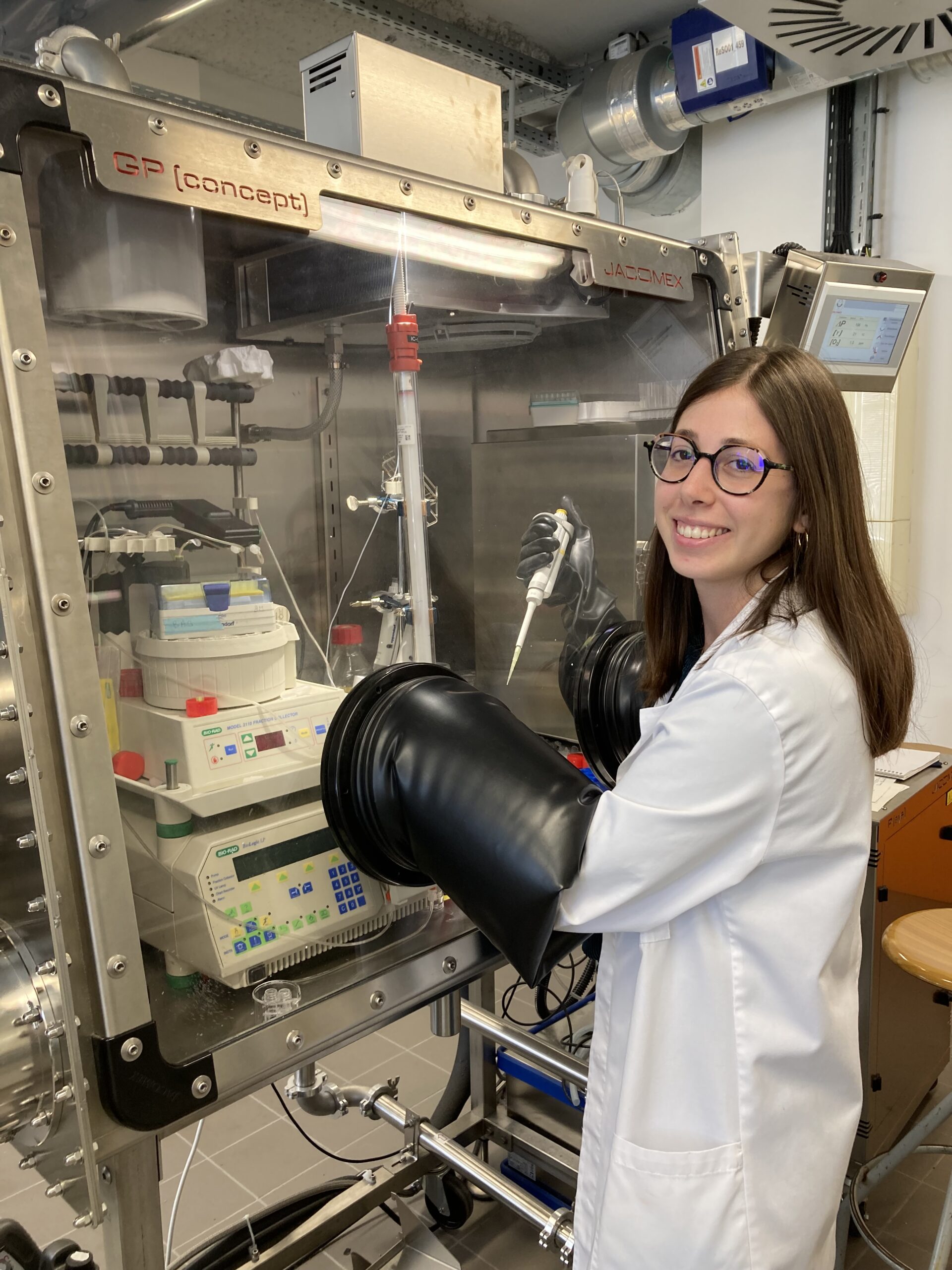
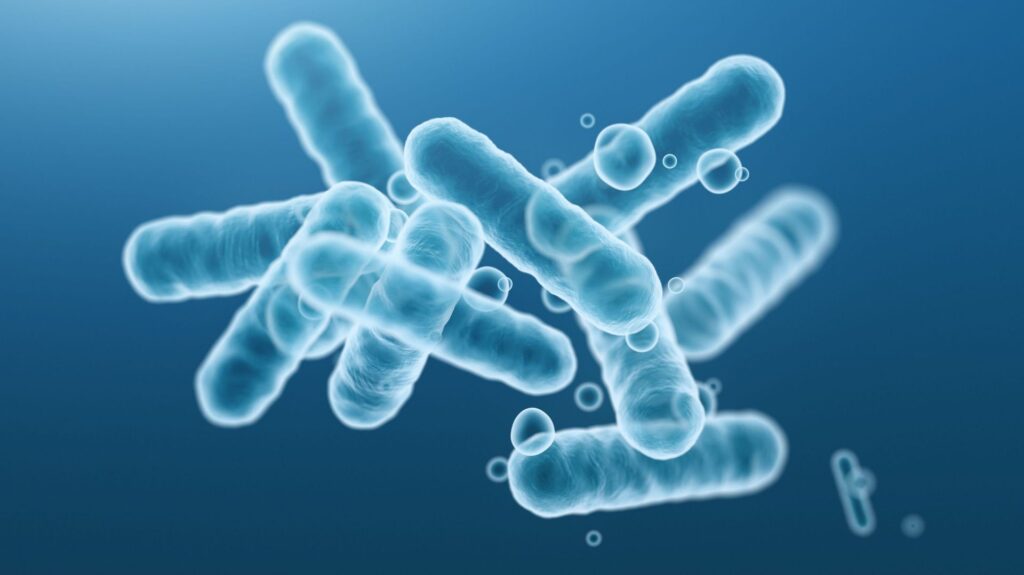
This discovery, which earned Dr. Seemann the CNRS Bronze Medal, is now being pursued by a young researcher at the lab who began her doctoral thesis in 2020 thanks to European funding. “During my thesis, I participated in the study of a molecule that inhibits one of these bacterial enzymes, called IspH. In vitro, the activity of IspH in the bacterium Pseudomonas aeruginosa is completely blocked by this molecule—which is very encouraging! However, a major challenge remains: finding a way to get this IspH inhibitor inside the bacteria, ” explains Gabriella Ines Bianchino, the Italian doctoral student leading the project. “Thanks to the support of the organizations Vaincre la Mucoviscidose and Grégory Le Marchal, I have an additional six months to modify a small part of the inhibitory molecule so that it can cross the bacterial cell wall and neutralize its target enzyme.”
If this crucial step is successfully completed, the resulting molecule will be the very first in a new class of antibiotics—a revolution in this field, where the last class of antibiotics to be discovered and subsequently used successfully dates back to … the late 1980s! The next step will be to evaluate the toxicity of this molecule on human cells, then to conduct tests on animal models before beginning clinical trials.
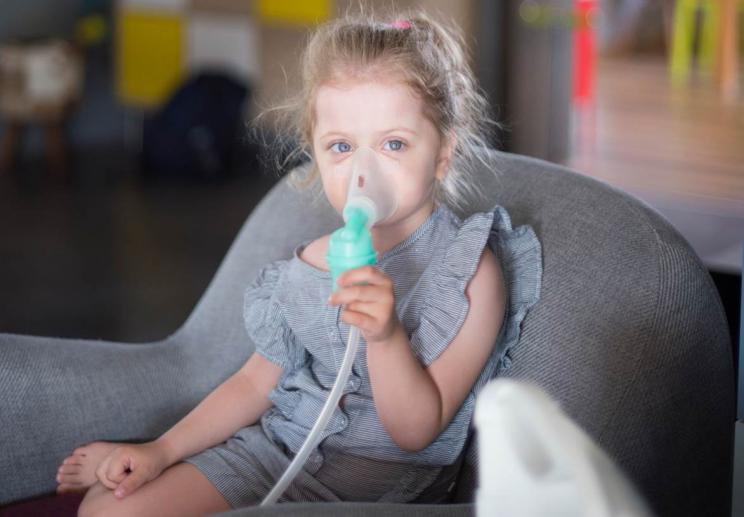
Ultimately, the goal is to provide an additional treatment option for patients with cystic fibrosis and, more broadly, a new therapeutic tool in the fight against antibiotic resistance—a scourge classified by the WHO as one of the 10 greatest threats toglobal public health.²