In Strasbourg, the Jean-Marie Lehn Foundation and the Force Foundation are joining forces to support Nextdial, a research project at the intersection of chemistry and medicine that aims to improve peritoneal dialysis. This first collaboration between the two foundations reflects a shared belief: interdisciplinary collaboration sparks innovations that truly make a difference for patients.
A health issue that affects patients' independence
End-stage renal disease requires patients to undergo dialysis to compensate for kidney failure while awaiting a kidney transplant. Of the two current dialysis techniques, hemodialysis remains the most common, but it requires repeated sessions (most often) at a dialysis center, a heavy reliance on technical facilities, and a lifestyle that is often restrictive.
These challenges affect patients of all ages, including children, for whom they take on a special significance. Several sessions per week mean repeated trips to and from the hospital, half-days of school missed, and a family routine organized around the sessions rather than the other way around. Added to this is a technical challenge that is particularly pronounced in pediatrics: hemodialysis requires vascular access—either a fistula or a catheter—yet the patient’s venous reserve must be preserved for a lifetime of future care. When feasible, the fistula must be punctured at every session, a procedure that is already taxing for adults but particularly delicate for young children.
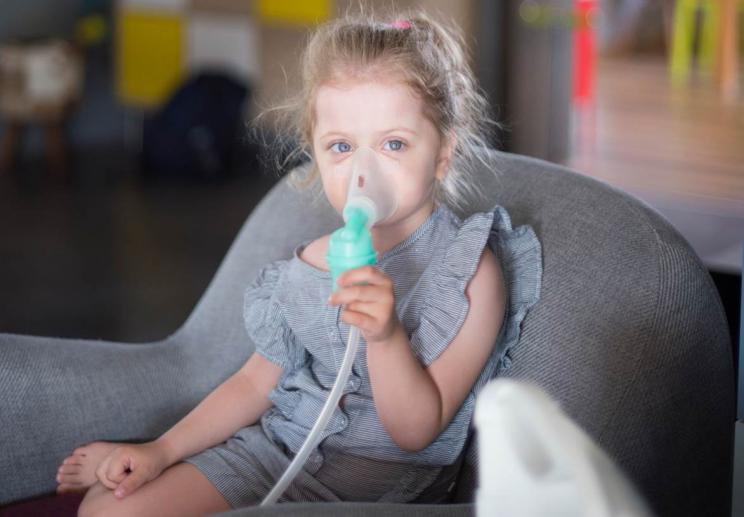
The second technique, peritoneal dialysis, is an alternative to hemodialysis that offers certain advantages: performed at home, it uses the peritoneum as an exchange membrane and allows patients to maintain a greater degree of independence. It is particularly well-suited for certain patients, especially pediatric patients, due to blood volume limitations. In fact, it is most often performed using an automated system: at night, while the patient sleeps, via a cycler connected to a catheter previously inserted into the abdomen. The patient goes to bed, the machine does its work, and the patient wakes up free to go about their day. It is this continuity of daily life—maintained despite the illness—that is one of the key benefits of peritoneal dialysis.
Peritoneal dialysis also addresses a societal challenge: with an aging population and rising rates of diabetes and hypertension, the number of patients requiring dialysis continues to rise, and hemodialysis centers—which are already under significant strain—will not be able to meet this demand on their own.
Its development, however, remains limited by several obstacles, including insufficient phosphate clearance. This mineral, which is normally obtained from the diet and regulated by healthy kidneys, accumulates in the body when kidney function declines. This accumulation is not merely a biological detail: it contributes to bone, metabolic, and cardiovascular complications and negatively impacts patients’ long-term prognosis. Improving the ability of peritoneal dialysis to remove this phosphate is therefore a major clinical challenge.
Nextdial aims to improve peritoneal dialysis
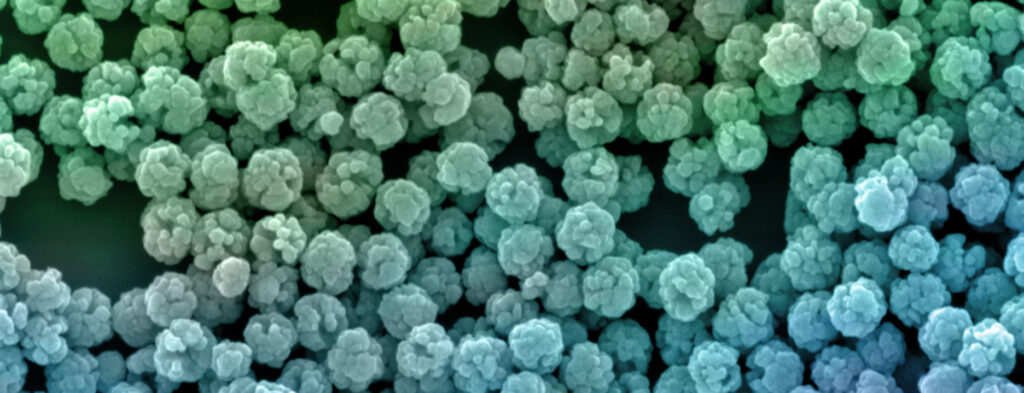
The Nextdial project specifically addresses this issue of removing excess phosphate during peritoneal dialysis. The idea is to enrich the dialysate with iron oxide nanoparticles coated with polyacrylic acid, which have already been identified in previous studies as promising phosphate adsorbents. When incorporated into the dialysate, these particles could enhance phosphate removal during the peritoneal dialysis session. The project now aims to take a crucial step forward: validating this approach through an in vivo proof of concept.
The benefit of this approach is that it does not disrupt the basic principle of peritoneal dialysis, but rather improves one of its essential components—the dialysate—to make the technique more effective and appealing.
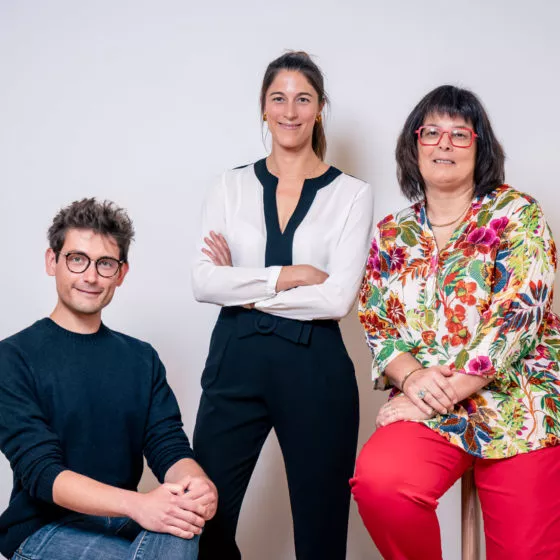
Nextdial is a prime example of truly interdisciplinary research: the project is led by Sylvie Begin-Colin, a materials chemist at ICPEES, and Ariane Zaloszyc, a professor and head of the pediatric nephrology department at the Strasbourg University Hospitals (HUS). One contributes her expertise in materials and their design, while the other brings clinical validation and in-depth knowledge of patients.
Two foundations, one shared conviction
The Nextdial project is supported by the Force Foundation. Convinced of the value of this interdisciplinary approach, the Jean-Marie Lehn Foundation has chosen to provide additional support, thereby enabling the team to conduct an even more in-depth proof-of-concept study.
Support from BPALC, a long-standing partner of the Jean-Marie Lehn Foundation
This co-funding is made possible thanks to the philanthropic support of Banque Populaire Alsace Lorraine Champagne (BPALC). As a long-standing partner of the Jean-Marie Lehn Foundation, BPALC has been supporting numerous innovative research projects at the Strasbourg chemistry campus for nearly 15 years.
The Jean-Marie Lehn Foundation would like to thank the BPALC for its commitment to working alongside us: the trust and shared values between the two organizations make it possible to advance cutting-edge research in Strasbourg.
The Nextdial project exemplifies a subtle yet very tangible innovation. It does not promise to replace one existing technique with another; rather, it seeks to make an already available option more effective, more robust, and potentially more widely used. For patients, the stakes are high: a better-suited home dialysis regimen capable of preserving independence without sacrificing biological efficacy. For the two foundations partnering on this project, it also holds the promise of future collaborations at the intersection of chemistry and medicine.