Foams: Complex Materials with Multiple Applications

Published on September 22, 2023

Whether liquid or solid, foams are truly fascinating. Scientists at the Charles Sadron Institute in Strasbourg are working to better understand and modify the structure of bubble assemblies in order to develop the materials of the future. We take a closer look with researcher Aurélie Hourlier-Fargette, winner of the “Les espoirs de l’Université de Strasbourg” science award in 2023.

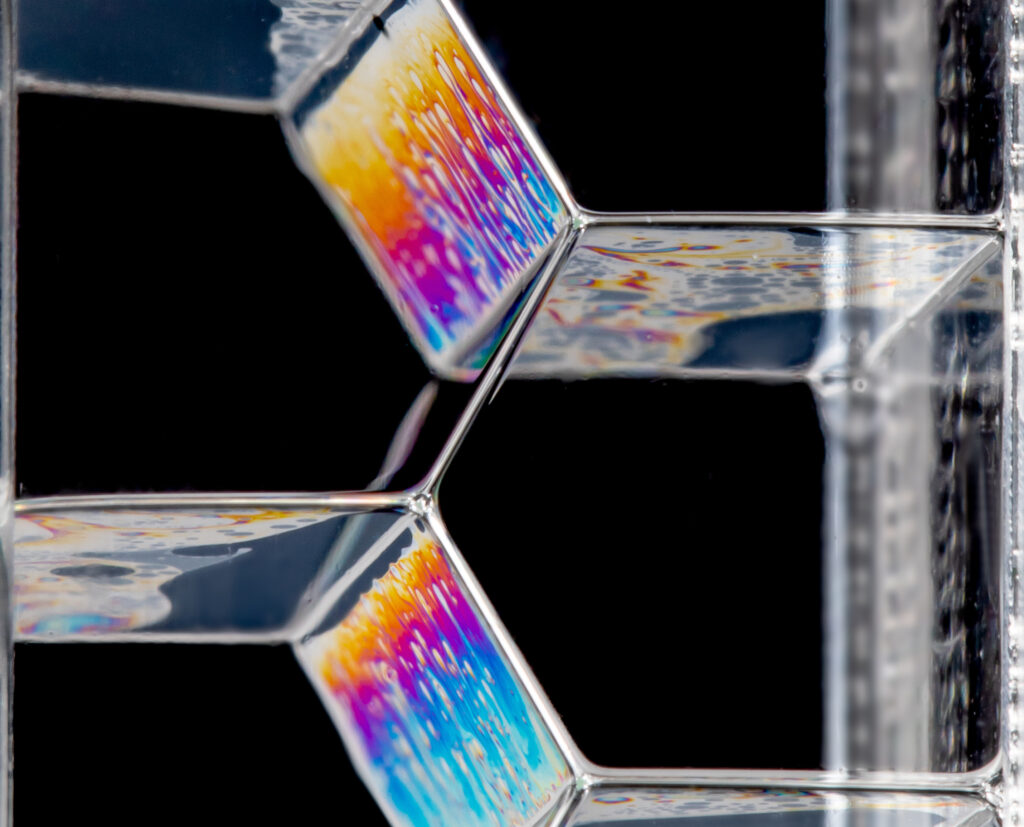
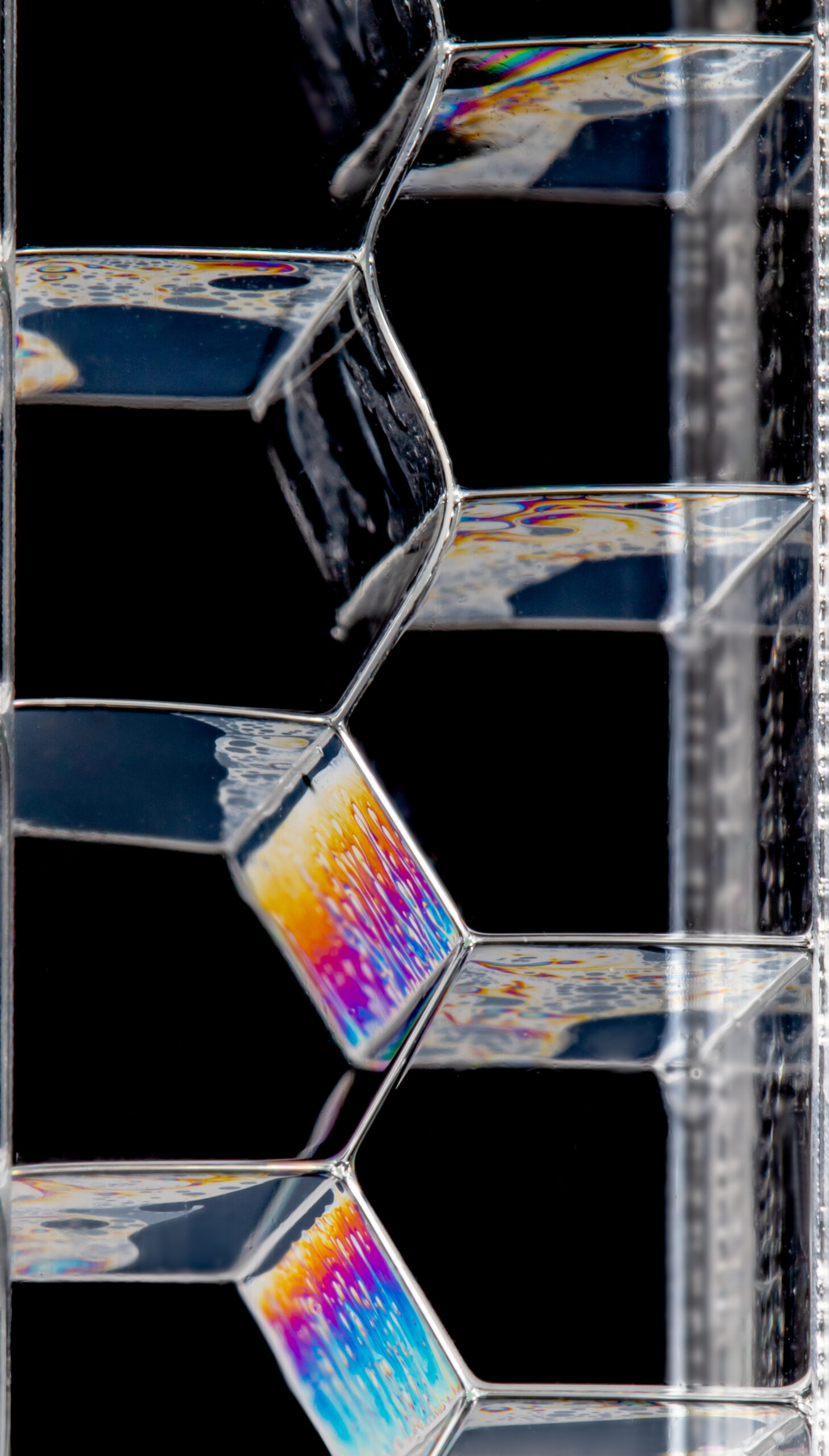
Credits: Manon Jouanlanne and Aurélie Hourlier-Fargette

Mattresses, car seats, package padding, and even bandages—solid foams are everywhere in our daily lives. “These are materials that contain a lot of air and have the advantage of being lightweight and cost-effective,” explains Aurélie Hourlier-Fargette. Since joining the CNRS at the Charles Sadron Institute (ICS) in 2019, she has been working on liquid and solid systems—at the intersection of physics, physical chemistry, and mechanics—as part of the MIM (Mechanics of Interfaces and Multiphase Systems) team led by Professor Christian Gauthier. Her favorite research topic? Studying the physics of bubble-fiber assemblies to develop new strategies for manufacturing structured materials. On this topic, the MIM and TSP (Theory and Simulation of Polymers) teams at the ICS have combined experiments and theory to explain how the competition between elasticity and capillarity determines the equilibrium structures of a two-dimensional foam column when an elastomer ribbon is introduced. This work has been recognized: one of the photographs of this system was selected for the finals of the CNRS Mécapixel photography contest, and the project received the American Physical Society’s Gallery of Soft Matter Award.

Discover New Architectural Styles

“After understanding how the 2D structure works, our challenge is to extend our research to 3D using foams capable of solidifying with appropriate polymer formulations,” explains the researcher. Indeed, once set, these foams will form a framework similar to the one they have when they are liquid. The project’s goal is therefore to modify the liquid precursors to develop new solid foam structures with innovative properties. While 3D printing today also allows for the creation of complex structures, it cannot achieve this on a large scale through self-assembly, unlike what would be possible with foams. This research could find applications in a wide range of fields of major interest to address current challenges, ranging from biomedicine to the paper industry, as well as construction materials, insulation, and impact protection.

Aurélie Hourlier-Fargette

Position: CNRS Research Fellow in the Mechanics of Interfaces and Multiphase Systems team, led by Prof. Christian Gauthier at the Charles Sadron Institute in Strasbourg.
Research Topic: Study of the architectures and properties of foam-fiber systems to create new materials with complex structures.
Awards:
2023: Winner of the “Les espoirs de l’Université de Strasbourg” science prize
2022: Finalist in the CNRS Mécapixel photo contest and recipient of the American Physical Society’s Gallery of Soft Matter Award
2018: Winner of the Gandy Prize from the Chancellery of the Universities of Paris
2017: Winner of the Saint-Gobain Young Researchers Prize awarded by the French Physical Society

Learn more about the “University of Strasbourg Rising Stars” science awards: https://savoirs.unistra.fr/talents/prix-espoirs-2023-six-chercheurs-a-lhonneur

Donation DONATIONS MAKE A DONATION